Why Does My Dog Get Excited When I Come Home?
From full-body wiggles to shoe offerings, the front door greeting is your dog's daily masterpiece of joy.
🐾 Free: what would your dog say about you?
Answer 6 questions →Your dog gets excited when you come home because your return triggers an immediate release of built-up emotional energy, relief, and social happiness. As social companion animals, dogs view their human owners as their primary source of security, comfort, and entertainment. Whether you left the house for eight hours or eight minutes, your arrival transforms their quiet world back into an active, engaging environment.
Short answer: Your dog gets excited when you return home because you are their primary social anchor and provider of security. Seeing you triggers a rush of natural feel-good chemicals like dopamine and oxytocin. Their enthusiastic greeting—whether through full-body wiggles, bringing you a favorite toy, or joyful vocalizations—is a healthy release of anticipation and affection.
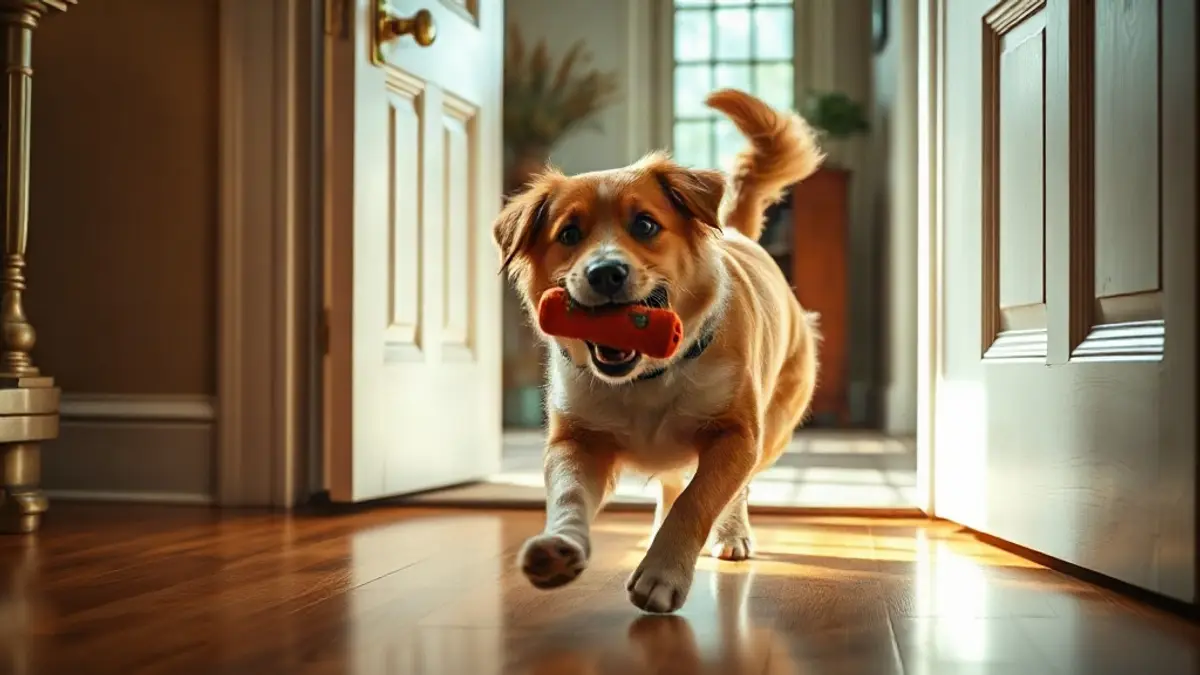
The Chemistry of Reunion: Why Does My Dog Get Excited When I Come Home?
To understand why does my dog get excited when I come home, it helps to look at what happens inside their brain when they recognize your presence. A dog’s sensory world is dominated by scent and sound. Long before your foot crosses the threshold, your dog has picked up on subtle environmental cues that signal your return. When those signals confirm it is really you, their brain experiences a rapid surge of reward-related neurotransmitters.
Neurological research on canine cognition suggests that familiar human scents activate the caudate nucleus, an area of the brain associated with positive expectations and emotional rewards. When your dog smells your specific scent on the porch or hears your car engine pulling into the driveway, their brain registers the incoming presence of their favorite person. The resulting rush of energy needs an immediate outlet, which is why you are often met with rapid tail wags, dancing paws, and eager sniffing.
Beyond brain chemistry, dogs are hardwired for pack reunion rituals. In wild canine groups, returning members are greeted with licks around the face, soft whining, and low tail wags as a way to reaffirm social ties and share information. When your dog greets you at the door, they are engaging in a modern version of this ancient social ritual. They want to smell where you have been, confirm that you are safe, and celebrate that the group is whole again.
Imagine a beagle named Pepper who slumbers quietly on the rug all afternoon. The moment a familiar key rattles in the lock, Pepper transforms into a spinning bundle of kinetic energy. This reaction is not just about hyperness; it is an instinctual expression of social relief. Your presence restores predictability and comfort to their day.
Why Does My Dog Wait at the Door Before You Even Turn the Key?
Many dog owners are amazed by their pet’s uncanny ability to predict their arrival. You might walk up the driveway only to see a nose pressed against the window shade, or open the door to find your pet sitting squarely on the welcome mat. Many owners wonder why does my dog wait at the door long before any obvious footsteps reach the porch.
Dogs possess extraordinary auditory sensitivity and a keen sense of time based on environmental patterns. Here are the main reasons your dog seems to know the exact moment you arrive:
- Distinctive Vehicle Sounds: Your dog can easily distinguish the specific pitch of your car engine, the squeak of your brakes, or the sound of your car door closing from hundreds of other vehicles on your street.
- Footstep Recognition: Every person walks with a unique rhythm and heel-to-toe cadence. Your dog learns the weight and pace of your stride over months of living together.
- Circadian Routines: Dogs have reliable internal clocks linked to daylight shifts, temperature changes, and digestive schedules. They quickly learn that when the sun reaches a certain angle, you typically return.
- Scent Decay Patterns: Some behavior researchers suggest that dogs track time through the fading strength of your scent in the house. As your morning scent slowly diminishes to a certain threshold, it signals to the dog that your return is imminent.
When your dog waits by the entrance, it is a playful way to read it as a canine countdown clock. They have recognized the familiar signals that mean their quiet stretch of waiting is over, and they want to be the very first thing you see when you open the house.
| Greeting Behavior | Physical Signals | Playful Interpretation | How to Respond |
|---|---|---|---|
| Full-Body Wiggle | Spine bends in a C-shape, tail wags low and wide, loose body posture. | ”I cannot contain my excitement that you are back!” | Offer calm, low-keyed petting and a quiet, warm voice. |
| Toy Presentation | Carries a shoe, pillow, or stuffed toy in mouth while making soft grunts. | ”Look what I saved for you while you were away!” | Acknowledge the object gently without taking it away forcefully. |
| Vertical Jumping | Leaps toward your upper chest, licks at chin, paws at waist. | ”I need to smell your face to confirm it is really you!” | Turn sideways calmly until all four paws touch the floor. |
| Vocal Greeting | High-pitched squeaks, soft roos, or short repetitive barks. | ”I have so much news to tell you about my afternoon!” | Talk back softly to soothe their emotional arousal level. |
| Leaning and Pressing | Presses body firmly against your shins, sits on your feet. | ”You are home, and I am anchoring myself right here.” | Pause for a moment to give steady, grounding side-scratches. |
Decoding Front-Door Behaviors: From Wiggles to Toy Offerings
Every dog develops a distinct homecoming signature. Some display frantic energy, while others carry out deliberate, funny rituals that make their owners laugh after a long day at work. Understanding these specific actions gives you a window into how your dog experiences your return.
Why does my dog bring me toys when I come home?
If you step through the front door and are immediately greeted by a dog carrying a squeaky alligator, a stray slipper, or a throw pillow, you are seeing a classic displacement behavior. When your dog sees you, their excitement level spikes dramatically. Holding an object in their mouth gives that intense surge of energy a safe, productive outlet.
Carrying an item also helps your dog channel their impulse to bite or mouth out of pure joy. By grabbing a favorite plushie, they redirect that mouthy excitement onto a toy rather than your hands or coat sleeves. It is also a form of social offering. In canine communication, showing a prized item to a returning companion is a friendly, non-threatening greeting that signals trust and playfulness.
The classic dog wiggles when I come home
When a dog wiggles when I come home, the movement involves much more than just a wagging tail. Their entire spine curves back and forth in a loose, fluid rhythm, often bringing their hindquarters all the way around toward their shoulders. Behavioral observers sometimes call this the “C-wiggle.”
This full-body movement is a clear sign of friendly submission and happy greeting. A stiff, rigid tail wag with a frozen body can indicate tension or hyper-vigilance, but a loose, head-to-tail wiggle means your dog feels completely safe and overjoyed. They are dropping all formal defensive posture to show complete comfort in your presence.
What it means when a dog jumps on me when I get home
When a dog jumps on me when I get home, it is usually driven by a fundamental canine desire: reaching your face. Dogs communicate a massive amount of social information through scent cues around the mouth, chin, and neck. When two dogs greet after time apart, they smell each other’s muzzles to gather information about where they have been and what they have eaten.
Because humans stand upright on two legs, your head is far out of easy reach for a medium or large dog. Leaping upward is simply the fastest way for your pet to get closer to your face and exchange greetings. While jumping can be inconvenient or unsafe if you are carrying groceries, it comes from a natural impulse to close the physical distance between you as quickly as possible.
Why Does My Dog Go Crazy When I Come Home After Only Five Minutes?
You walk outside to take out the trash or grab the mail from the curb. You are gone for less than three minutes, yet when you step back inside, your dog greets you with the exact same level of frantic enthusiasm as if you had been deployed overseas for six months. Why does my dog go crazy when I come home after such a short time?
Dogs do not measure time using precise mechanical clocks in the way humans do. While they perceive duration through physical cues—like a full bladder, hunger levels, or changing light—their immediate emotional experience is rooted in the present moment. To your dog, time apart is binary: you are either here, or you are not here.
When you leave the house, even briefly, the continuous flow of social connection is paused. When you reopen the door, the excitement of your reappearance is triggered anew. The sudden emotional shift from “my human is absent” to “my human has returned” generates a burst of joy regardless of how many minutes passed on the clock. It is a sweet reminder that to your dog, your presence is always a notable event.
Discover What Your Dog Is Trying to Say At the Front Door
Have you ever wondered what your dog’s front-door dance would sound like if it were translated into simple, affectionate words? Every sock brought to the doorway and every low tail-wiggle is a tiny message of trust. We built a playful way to capture those exact habits and turn them into something warm and memorable.
You can take the free six-question experience to discover what your dog might say about you and your daily routines. It takes about a minute, requires no signup, and uses six simple questions about your pet’s funny habits, greeting styles, and unique personality to generate a personalized note from your dog’s perspective. It offers a sweet, simple glimpse into how your dog views the everyday life you share together.
Distinguishing Joyful Greetings From Separation Distress
While enthusiastic door greetings are a normal and healthy part of living with a dog, it is important to distinguish between happy excitement and underlying stress. For some dogs, the front-door greeting is less about pure celebration and more about intense panic relief.
Standard, healthy excitement usually looks loose, playful, and temporary. Your dog wiggles, barks or carries a toy, receives a few soft pets, and then settles down within five to ten minutes to chew a bone or nap. Separation-related distress, on the other hand, involves persistent, frantic anxiety that does not dissipate quickly after you return.
Signs that a frantic greeting might stem from deeper anxiety include:
- Destructive behavior focused on entryways, doorframes, or window blinds while you are away.
- Excessive drooling, panting, or heavy pacing that continues long after you have come inside.
- Puddles or accidents near the entrance despite regular potty breaks.
- Inability to settle down, relax, or leave your side for hours after your arrival.
If your dog shows persistent signs of distress, self-harm, or overwhelming panic when left alone, it is best to consult a veterinarian or a certified professional dog trainer. A qualified professional can help evaluate behavioral health, rule out underlying medical issues, and create a calm, structured plan to help your dog feel secure.
How to Teach Calmer Homecomings Without Hurting Their Feelings
If your dog’s front-door enthusiasm involves dangerous jumping, scratched doors, or ruined clothing, you may want to tone down the entrance energy. The goal of calming down front-door greetings is not to extinguish your dog’s happiness, but to guide that energy into safer, more relaxed behaviors.
Here is a simple four-step approach to establishing peaceful, happy greetings:
- Keep Your Initial Energy Low: When you walk through the door, avoid using high-pitched baby voices or energetic movements. Step inside quietly, put your bags down, and remain neutral until your dog’s paws stay firmly on the floor.
- Redirect Excited Mouths: If your dog likes to nip clothes or jump up out of overarousal, keep a dedicated soft toy right outside the door. Hand it to them the second you step inside to give their teeth a harmless job.
- Reward Four Paws on the Floor: Wait for a moment of calm—even a brief two-second pause where all four paws touch the carpet—before offering soft, steady strokes along their neck or shoulder.
- Create a Mat Station: Teach your dog to go to a comfortable mat or dog bed near the entryway when the doorbell rings or the door opens. Offer a slow scratch and a quiet praise only after they have reached their designated spot.
By staying consistent, you show your pet that calm behavior is what makes the wonderful human attention start. They still get to celebrate your arrival, but without the chaotic leaping or frantic stress.
What the Door Routine Reveals About Your Connection
It is easy to view the daily front-door ritual as a routine chore—just another moment of taking off your shoes, hanging up your keys, and putting down groceries. But if you pay close attention, those two minutes at the entrance reveal a tremendous amount about the bond between dog and owner.
Your dog does not care if you had a terrible day at work, lost an important account, or got stuck in bumper-to-bumper traffic. They do not judge your outfit or care whether you accomplished everything on your to-do list. When you step through that door, you are greeted by a creature whose entire world brightens simply because you exist in the same room again.
Observing the little things dogs do during these moments—how they check your hands for familiar scents, lean their weight against your shins, or follow your steps into the kitchen—reminds us of the honest nature of canine companionship. If you have ever wondered why does my dog follow me everywhere right after you get home, it is simply because they want to re-establish proximity after hours of quiet distance.
These small rituals answer a fundamental question many pet owners hold in their hearts: does my dog know I love them? The frantic tail wags and gentle sigh of contentment when you finally sit down together are clear evidence that your home is their ultimate safe zone.
Why the Door Routine Is Often the Most Moving Line in a Dog Letter
When owners write down memories of their pets or explore a letter from dog to owner, the front-door greeting almost always comes up. It is rarely the expensive toys, structured training classes, or fancy dog beds that stand out most when reflecting on life with a companion animal. Instead, it is the predictable, loyal pattern of the front door.
There is something profound about knowing that somewhere in the world, someone is listening for the sound of your tires on the driveway. When people pause to think about things my dog wants to tell me, the daily homecoming is the central anchor. It represents unconditional safety and steady affection in a fast-moving world.
Consider a golden retriever named Barnaby who always grabs the left shoe from the hallway rug the moment his owner unlocks the deadbolt. He does not chew the shoe or hide it; he simply holds it softly by the laces and does a quiet lap around the kitchen island before laying it at his owner’s feet. That tiny, specific detail says far more about Barnaby’s bond with his human than any broad statement about pet loyalty ever could.
Turning This Daily Routine Into a Personalized Keepsake
If you want to capture the specific, humorous, and touching details of your dog’s front-door ritual, you can turn those everyday memories into a lasting piece of personal art.
At Letter From My Dog, we help owners transform those tiny, specific quirks into beautiful, custom keepsakes created from the details you share, with the help of generative AI. Our core offering, Letter From My Dog™ ($7, one-time purchase), creates a full personalized letter written from your dog’s perspective based on your answers about their life. It includes your custom bond story, ten specific things your pet loves about life with you, bonding ideas, a printable high-resolution PDF, phone wallpapers, and shareable social cards. There are no subscriptions, and your finished digital keepsake is generated right after purchase so you can print it at home or frame it.
If you want to explore other creative formats, you can also check out our custom personalized dog storybook ($19) for a full visual narrative, or create a set of custom posters with our dog movie poster pack ($4) to show off your dog’s unique personality.
Frequently asked questions
Why does my dog greet me at the door with a toy every time?
When a dog greets you with a toy, they are using an object to channel high emotional arousal into a safe, controlled behavior. Bringing a plushie, slipper, or ball helps them manage the surge of excitement they feel when you return. It gives their mouth something to hold so they do not bite at clothes or hands out of pure joy. It is also a social peace-offering that signals playfulness, trust, and happiness.
Is it bad if my dog gets extremely excited when I come home?
High excitement is completely normal, but extreme, persistent distress is not. If your dog wiggles, wags their tail, and calms down within a few minutes of your arrival, it is a healthy expression of joy. However, if your dog pants heavily, drools excessively, paces frantically, or cannot settle down for half an hour after you enter, it may indicate underlying separation anxiety rather than simple happiness. In those cases, consulting a vet or certified trainer is recommended.
Should I ignore my dog when I come home to make them calmer?
You do not need to coldly ignore your dog, but keeping your entry low-key helps prevent over-excitement. Speak in a quiet, grounded voice and avoid high-pitched praise or fast movements until all four paws are on the floor. Offering a calm, steady stroke along their side rewards relaxed behavior without overwhelming their senses or making your arrival feel like a chaotic event.
Why does my dog bring me shoes instead of toys when I get home?
Shoes are prime real estate in your dog’s sensory world because they carry an intense concentration of your personal scent. Grabbing a shoe from the hallway mat allows your dog to hold onto a powerful sensory connection to you while releasing built-up greeting energy. Unless your dog is actively chewing or damaging the shoes, holding a slipper gently at the entrance is a harmless, affectionate displacement behavior.
How can I stop my dog from jumping on guests when they enter?
To prevent jumping on visitors, manage the entryway environment before guests arrive. Keep your dog on a short leash, or train them to sit on a designated mat away from the front door. Instruct guests to keep their hands down and avoid eye contact until your dog has all four paws firmly planted on the floor. Rewarding calm sitting with treats teaches your dog that peaceful posture brings social attention.
Do dogs remember how long you were gone during the day?
Dogs perceive the passage of time through biological rhythms, light shifts, and the fading strength of familiar scents in the home, rather than tracking hours on a clock. While they recognize the difference between a quick five-minute trip and a long eight-hour workday, their immediate reaction upon your return is driven by the emotional thrill of reunion. To your dog, your return is always a cause for celebration.
Keep reading
Why Does My Dog Follow Me Everywhere? The Sweet Reasons
From kitchen footsteps to bathroom door duty, here is what drives your dog's constant shadowing and what it says about your bond.
The Little Things Dogs Do That Mean Everything
Real connection with your dog isn't built on big vacations—it lives in the door greetings, couch steals, and silent side-eye.
Letter From Dog to Owner: What It Would Really Say
What your dog would put on paper isn't a poem—it's an honest, funny account of your shared household rituals and quiet moments.