Why Does My Dog Sleep Next to Me? Comfort and Closeness
From heavy sighs to leaning against your shins, the place your dog chooses to sleep each night reveals a quiet language of comfort and social trust.
🐾 Free: what would your dog say about you?
Answer 6 questions →Dogs choose to sleep next to their owners primarily because of security, thermal regulation, and social bonding. In wild canine groups, sleeping closely helps maintain pack warmth and safety while reinforcing social ties. When your dog curls up against you, they are choosing the most comforting and secure location in their environment—you.
Short answer: Your dog sleeps next to you because you provide warmth, security, and familiarity. Canines naturally seek closeness with trusted group members during vulnerable rest periods. Whether they lean against your side or sleep at your feet, choosing your proximity reflects deep comfort, social connection, and a preference for your familiar scent.
Why does my dog sleep next to me? The biological drive for closeness
To understand why your dog seeks your side at night, it helps to look at the foundations of dog behavior. Sleeping is a vulnerable state for any animal. In the wild, canines rest together in tight groups to pool body heat and share awareness of potential threats. When a dog curls up against another member of their social group, it sends a clear signal of trust and mutual safety.
In a human home, you are your dog’s social anchor. Throughout the day, your household produces a rhythm of movement, voice, and smell. By nightfall, your dog seeks out the spot that offers the strongest sense of predictability. Your scent is a primary trigger for relaxation. Bed sheets, worn blankets, and the space beside your legs are saturated with your unique olfactory signature, which signals to your dog’s nervous system that the environment is safe.
Thermal regulation also plays a major role. Dogs have a higher base body temperature than humans, usually ranging between 101 and 102.5 degrees Fahrenheit. During cooler nights, pressing up against you helps them retain warmth efficiently. On warmer nights, they might shift slightly farther away, but the desire to remain in the same room or at the foot of the bed persists because the psychological benefit of proximity remains unchanged.
Social sleeping and household attachment
Dogs are highly adaptive social creatures. Unlike solitary hunters, they thrive on shared spaces and cooperative group dynamics. Choosing to sleep near you is not necessarily about guarding or dominance; rather, it is an expressive display of social cohesion. Your presence tells your dog that the day is done and that no active duties—like watching the front window or waiting for meals—are required.
Scent recognition and the relaxing human presence
Your dog’s sense of smell is vastly more acute than yours. To a dog, your scent is not just a way to identify you—it is a calming agent. Sleeping near your clothes or sleeping directly beside you exposes them to a continuous stream of familiar scents, helping lower their heart rate and ease them into deeper sleep cycles.
Decoding dog sleeping positions meaning: From donuts to belly-up
While every dog has unique quirks, observing how they arrange their bodies during sleep provides interesting glimpses into their mood and physical comfort. It is important to note that dog sleeping positions meaning should be interpreted loosely. Temperature, surface texture, and age often influence how a dog rests just as much as emotional state.
Many owners notice that their dogs shift positions multiple times throughout the night. A dog might start tightly curled and end up sprawled on their back by sunrise. Here is a playful way to read common canine sleeping postures.
The donut or curled-up ball
In the donut position, a dog tucks their paws under their body and sweeps their tail around their nose. This is one of the most common wild postures. It serves two practical purposes: conserving body heat and protecting vital internal organs.
When your dog sleeps in a donut shape next to you, it does not mean they feel insecure. It often simply means they want to stay cozy, especially during chilly seasons or in air-conditioned rooms. It is a compact, comfortable posture that allows a quick transition to standing if they wake up.
The side sleeper
When a dog stretches out on their side with all four legs extended, it suggests complete physical relaxation. This posture leaves their vital organs exposed and requires a relatively large footprint. Dogs usually choose side sleeping when they feel completely secure in their surroundings and are at a comfortable ambient temperature.
The superman or sprawled belly-down
Popular among puppies and high-energy breeds, the superman position involves lying on the stomach with front legs stretched forward and back legs extended behind. This is a common posture for quick naps. It allows the dog to cool their belly against tile or hardwood floors while keeping them ready to spring into action the moment you move toward the kitchen.
The back sleeper and ridiculous dog sleeping positions
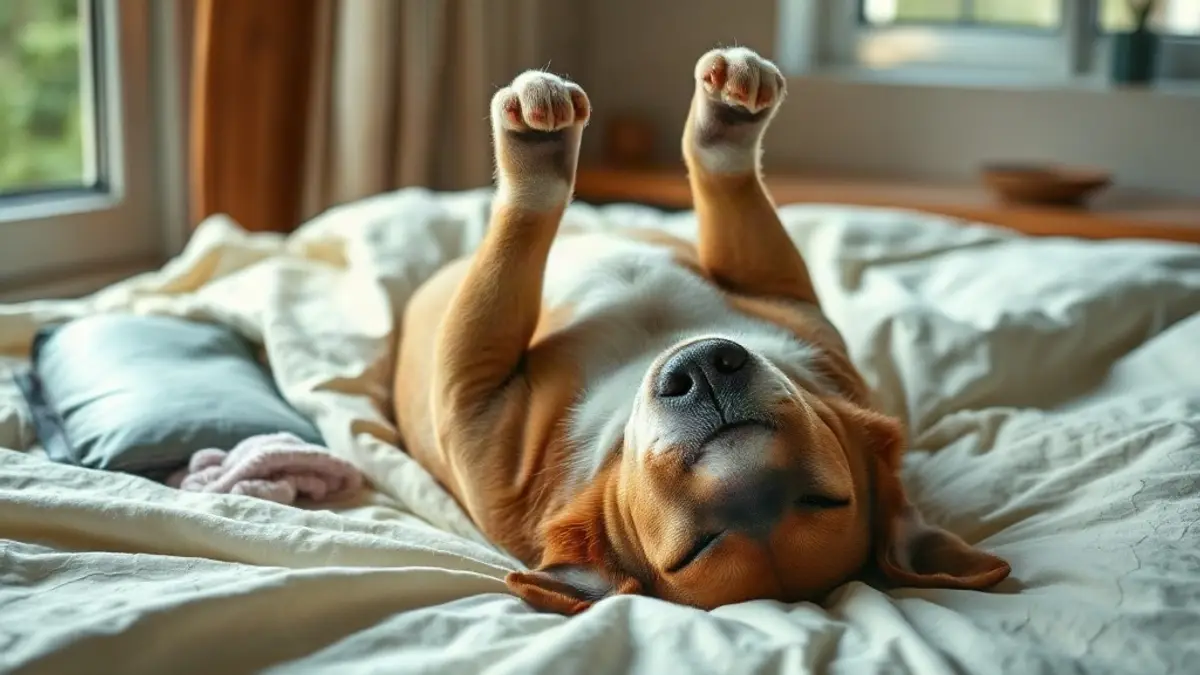
Perhaps the most entertaining posture is the back sleeper, where a dog lies on their spine with all four paws dangling in the air. This is one of those ridiculous dog sleeping positions that never fails to make owners laugh. Lying upside down exposes the belly, which is a sign of ultimate vulnerability and trust. It also serves as an efficient way to dump body heat through the less furry belly area.
| Sleeping Position | Visual Appearance | What It Commonly Suggests | Best Environment |
|---|---|---|---|
| The Donut | Tightly curled ball, nose to tail | Heat preservation, classic cozy rest | Cooler rooms, small spaces |
| The Side Sleeper | On side, legs extended loosely | Deep relaxation, safety, high comfort | Moderate temperatures, open beds |
| The Superman | On belly, front and back legs stretched | Quick resting, easy transition to play | Cool hard floors, warm days |
| The Belly-Up | On back, paws in the air, belly exposed | Complete trust, temperature dumping | Safe indoor spaces, soft rugs |
| The Side Lean | Pressed firmly against your body | Social bonding, emotional closeness | Next to trusted human |
Why does my dog sleep against me or press their body to mine?
If you have ever woken up to find your dog pressed so tightly against your leg that you can barely roll over, you might wonder why does my dog sleep against me with such intention. Physical contact during sleep is a direct continuation of puppyhood habits.
Littermates sleep in a tight, tangled pile from the day they are born. That tactile feedback—feeling the gentle rise and fall of another body’s breath—is deeply wired into canine biology as a signal of safety. When an adult dog presses their spine or shoulders against your hip, they are recreating that shared tactile reassurance.
This behavior, often called contact sleeping, is a straightforward testament to emotional attachment. It is your dog’s way of keeping tabs on you without needing to stay awake. If you shift or get up, the physical connection alerts them immediately, allowing them to follow or adjust without missing a beat.
For some dogs, pressing close is also a subtle way of seeking reassurance during quiet night hours. The gentle pressure of your body acts like a weighted blanket, settling their nervous system so they can drop into deeper, restorative slumber.
Why does my dog sleep at my feet instead of near my chest?
Not all dogs want to be head-to-head or snuggled under the chin. Many dogs consistently choose the lower third of the bed. If you ask yourself why does my dog sleep at my feet, the reason usually comes down to a balance between physical comfort and spatial awareness.
Sleeping at the foot of the bed offers several practical advantages for your dog:
- Optimal temperature control: The head of the bed is often crowded with heavy pillows, duvets, and human body heat. The foot of the bed is typically cooler and offers more airflow.
- Freedom of movement: Dogs shift positions throughout the night. Resting at your feet allows them to stand up, stretch, turn around, or hop off the bed to stretch on the rug without disturbing you or getting trapped under heavy covers.
- Clear sightlines: From the bottom of the bed, a dog often has a better view of the bedroom door and hallway, allowing them to keep passive watch over the entry points of the room.
- Respect for personal space: Some dogs prefer having a small physical buffer while still staying within your immediate presence.
Choosing the foot of the bed does not mean your dog is less attached to you. It simply shows that they have found a practical balance between closeness and personal breathing room.
Discover what your dog would say about your nighttime routine
Every dog notices the tiny details of your shared routine, from the way you tuck in the blanket to the midnight quiet of your home. If you have ever wondered how your dog sees these quiet moments, take a quick pause to discover their perspective.
You can complete the free six-question experience in about a minute with no signup required. Just answer six simple questions about your dog’s habits and daily quirks to receive a personalized readout reflecting what your dog might say about life by your side.
Quirky bedtime rituals that reveal your dog’s personality
Bedtime is rarely a quiet, sudden event for a dog. It usually involves a series of charming, predictable rituals that highlight their unique personality. These behaviors are normal expressions of instinct combined with habit, and observing them is part of the joy of sharing a home with a dog.
Many of these endearing habits stem from natural behaviors that have been adapted to human indoor living. You might notice your dog engaging in several classic pre-sleep behaviors:
- The nesting spin: Circling three or four times before lying down is a ancestral trait. In the wild, canines trod down high grass, flattened brush, and cleared away insects or sharp twigs before settling into a spot.
- Pillow stealing: Some dogs systematically claim your pillow the moment you stand up to brush your teeth. They are drawn to the spot where your scent is concentrated most strongly.
- The dramatic sigh: A long, heavy exhaled sigh right as a dog settles their chin onto the mattress signals a shift in the nervous system from alertness to complete rest.
- Blanket burrowing: Breeds that were originally bred to work in burrows or dens often love pushing their noses under sheets or blankets to create a dark, warm enclave.
These whimsical behaviors are part of what makes sharing a sleeping space so memorable, reflecting the playful routines described in funny things dogs do throughout the day.
Is sleeping together right for every home? Setting personal boundaries
While sharing a bed with your dog offers comfort, warmth, and quiet companionship, it is not mandatory for a healthy relationship. Sleeping arrangements are deeply personal, and what works wonderfully for one household may not suit another.
If you are light sleeper, suffer from pet allergies, or simply prefer an undisturbed mattress, establishing clear spatial boundaries is completely fine. Dogs adapt remarkably well to consistent routines, provided their fundamental needs for comfort and security are met elsewhere in the room.
If you prefer your dog to sleep in their own bed, here are practical steps to make that transition smooth and rewarding:
- Choose a high-quality orthopedic dog bed: Ensure the bed provides proper support and fits your dog’s preferred sleeping posture, whether they like to stretch or curl.
- Place the dog bed near your own: Positioning their bed within eyeshot and arm’s reach helps them feel connected to you without occupying space on your mattress.
- Incorporate your scent: Place an unwashed t-shirt or small blanket you have used on their bed to provide that soothing olfactory presence.
- Maintain consistent expectations: Stick to your boundary every night. Inconsistent rules can confuse your dog and make settling down more difficult for both of you.
Whether your dog rests on your duvet, at the foot of your mattress, or in a cozy corner bed two feet away, what matters most is consistency and physical comfort.
When a change in sleeping position signals it is time to check in
While most sleeping variations are normal responses to comfort or temperature, sudden shifts in sleep patterns can occasionally point to physical discomfort or health changes. Dogs are adept at hiding subtle pain, and changes during quiet rest times can provide early hints that something needs attention.
Pay attention if you notice any of the following changes in your dog’s nighttime habits:
- Sudden inability to find a comfortable position, characterized by frequent pacing, standing up, or circling repeatedly without lying down.
- Reluctance to sleep in a previously favored position, such as avoiding curling up or refusing to stretch out.
- Vocalizations upon lying down or rising, such as whimpering, groaning, or sharp yelps.
- Excessive panting or restlessness during cool night hours.
If you observe sudden, persistent shifts in your dog’s sleep position, mobility, or energy levels, consult a veterinarian or certified animal behavior professional. A routine checkup can rule out joint discomfort, internal distress, or age-related changes, ensuring your dog stays comfortable night after night.
Turning this into a keepsake
Your dog’s bedtime habits—where they curl up, how they claim a corner of the blanket, and the way they sigh when they settle in—are tiny, unforgettable details. These subtle routines define the quiet bond you share every day.
At Letter From My Dog, we help you capture those exact details in a meaningful form. The core offering is a personalized Letter From My Dog™ keepsake for $7 (one-time purchase). Built directly from the specific habits and memories you share about your dog, this keepsake includes a full customized letter from your dog’s perspective, Our Bond Story, 10 Little Things Your Dog Probably Loves About Life With You, printable PDF artwork, a smartphone wallpaper, and an Instagram story share card.
If you want to expand your collection, you can also explore a personalized digital dog storybook ($19) that turns your daily life into an illustrated narrative, or the Dog Movie Poster Pack™ ($4) for a fun cinematic print. Each keepsake is generated after purchase from your answers, offering a thoughtful way to celebrate things my dog wants to tell me about our life together.
The bedtime spot as a reflection of your everyday story
At the end of the day, where your dog sleeps next to you comes down to a quiet choice made of trust and habit. Whether they lean heavily against your shins, steal your favorite pillow, or sleep stretched across the floor nearby, they are choosing to anchor their rest to your presence.
Paying attention to these small routines offers a deeper appreciation for the little things dogs do to show their affection. You don’t need grand gestures to know your dog feels at home; sometimes, all it takes is the steady rhythm of their breathing beside you as the house grows quiet.
Frequently asked questions
Why does my dog sleep next to me instead of their own bed?
Your dog chooses your bed because it is filled with your soothing scent and offers physical warmth. To a dog, sleeping near you provides a strong sense of social security and comfort that a standalone dog bed in an empty corner cannot match.
Why does my dog push against me while sleeping?
Dogs often push against you while sleeping to seek contact pressure, which helps calm their nervous system. This physical contact stems from puppy habits of sleeping in a snug pile with littermates for warmth, safety, and physical reassurance.
Is it bad to let my dog sleep in my bed?
It is not inherently bad to let your dog sleep in your bed if everyone gets a good night’s rest. As long as your dog does not show bed-related resource guarding and your sleep quality remains high, sharing a bed is a safe, personal choice.
Why does my dog change sleeping positions so many times at night?
Dogs change sleeping positions throughout the night primarily to regulate their body temperature and relieve pressure on their joints. Shifting from a tight donut shape to an open side position helps them release excess body heat as the room temperature changes.
Why does my dog sleep on my clothes when I am not in bed?
Your clothes carry a high concentration of your scent. When you are away from the room, lying on your worn clothing gives your dog a comforting connection to your presence, helping them feel relaxed and secure during quiet hours.
What if my dog suddenly starts sleeping in a different room?
If your dog suddenly changes their routine and sleeps far away, it could be due to temperature changes, household noise, or physical discomfort like joint stiffness. If the behavior comes with lethargy or signs of pain, ask your veterinarian for a quick health check.
Keep reading
Am I My Dog's Safe Place? Comfort, Trust and Home Base
Discover how your dog signals trust, uses you as an emotional home base during stressful moments, and chooses you as their ultimate safe place.
Funny Things Dogs Do (and Why We Love Their Quirks)
From post-bath zoomies to dramatic head tilts, an inside look at the endearing behaviors that make life with dogs so endlessly entertaining.
Signs Your Dog Loves You (and Trusts You)
Your dog cannot say 'I love you' in words, but their body language, sleep spots, and walk check-ins reveal how deeply you are connected.