Signs Your Dog Loves You (and Trusts You)
Your dog cannot say 'I love you' in words, but their body language, sleep spots, and walk check-ins reveal how deeply you are connected.
🐾 Free: what would your dog say about you?
Answer 6 questions →Dogs express their affection and trust through consistent, everyday body language rather than dramatic speeches. When your dog leans heavy against your legs, keeps soft eye contact, or pauses on a walk to look back at you, they are showing clear emotional attachment. Recognizing these quiet habits helps you understand how safe, comfortable, and connected your dog feels in your daily life together.
Short answer: Key signs your dog loves you and trusts you include loose body posture, gentle eye contact, leaning against your legs, resting in vulnerable positions near you, and checking in visually while outdoors. Dogs express attachment through proximity and routine. Every dog shows affection differently depending on their personality, age, and breed background.
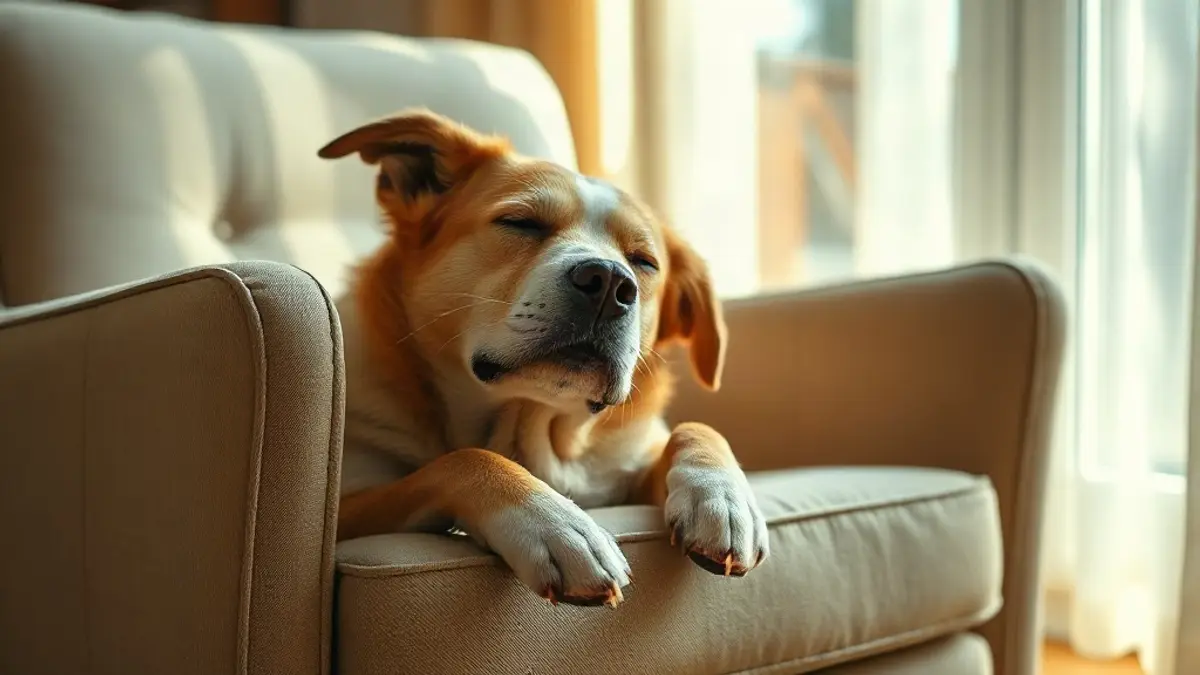
Clear Signs Your Dog Loves You in Everyday Life
Recognizing the subtle ways canine affection works comes down to observing the quiet moments of your home routine. Dogs rarely broadcast their feelings with loud, constant fanfare. Instead, they reveal their preference for your company through small, repeated choices throughout the morning, afternoon, and evening. Understanding dog behavior allows you to see how deeply integrated you are in their world.
Soft Eye Contact and the Gentle Gaze
When a dog looks at you with relaxed eyelids, a soft facial expression, and slow blinks, it may suggest a high level of comfort and security. Direct, hard staring in the canine world can feel defensive or assertive. Soft, lingering eye contact, however, releases calm neurochemicals in both dogs and humans. If your dog catches your eye across the living room and holds your gaze for a few quiet seconds before sighing and resting their chin, that gentle exchange is one of the clearest indications of a peaceful connection.
The Heavy Lean
Many owners wonder does my dog know I love them when their dog routinely comes over and dumps their full body weight against their shins. Leaning is the canine equivalent of a warm hug or an anchor point. By pressing their torso into your legs while you make coffee or stand in the kitchen, your dog is actively choosing physical contact over open space. It is a sign of affection, a bid for reassurance, and a practical way of saying you are their stable foundation.
The Deep Exhale and Contented Sigh
Pay attention to what happens right after your dog settles down next to your couch or chair. If they lie down, stretch out their paws, and let out a long, vocal exhale, they are signaling complete physical decompression. Dogs only let their guard down entirely when they feel secure in their environment. That deep sigh suggests their nervous system has shifted from alert status to total relaxation because you are nearby.
Subtle Signs Your Dog Trusts You and Feels Safe
Trust builds over time through consistent interactions, predictable routines, and gentle communication. While love is often expressed through enthusiasm, trust is visible through quiet vulnerability and peaceful rest. Noticing these signs helps answer the common question: am I my dog’s safe place?
Exposed Belly and Unfiltered Sleep Positions
A dog’s belly houses their most vital organs. In the wild or in high-stress environments, exposing the stomach leaves an animal open to threat. When your dog rolls onto their back on your rug, limbs sprawling in four different directions, it suggests absolute confidence in their safety. Whether they sleep completely upside down or curled on their side with their throat exposed, those loose sleep postures show they do not feel the need to remain guarded around you.
Checking In During Outdoor Walks
Next time you take a walk through your neighborhood or along a park trail, watch how often your dog looks back at you. A dog who frequently pauses, turns their head to make eye contact, or matches your walking pace is demonstrating a strong social bond. Imagine a young spaniel sniffing an intriguing patch of grass, stepping three paces forward, and then instantly looking back to verify you are still on the other end of the leash. That automatic check-in reveals that even amidst exciting outdoor smells, you remain their reference point.
Seeking Comfort When Startled
When an unexpected loud sound occurs—such as a thunderstorm, a dropping pan, or fireworks in the distance—where does your dog head first? If your dog immediately moves toward your side, rests their head on your lap, or sits behind your heels, they view you as a source of protection. Rather than hiding under a bed in isolation, choosing to seek your physical presence demonstrates profound trust in your ability to keep them safe.
The Morning and Greeting Rituals That Reveal Attachment
How your dog acts when you wake up or step back through the front door speaks volumes about your connection. Greetings do not need to be chaotic or hyperactive to be meaningful; the intentionality of the greeting is what matters most.
The Full-Body Wiggle
A stiff, fast-wagging tail held high can sometimes indicate alertness or conflict, but a loose, full-body wag that starts at the shoulders and makes their whole hindquarters sway is pure happiness. When you arrive home, a dog who greets you with soft ears, a broad tail sweep, and a slightly curved spine is showing unreserved joy. Exploring why does my dog get excited when I come home shows that your return is often the highlight of their daily schedule.
Presenting Their Favorite Items
Does your dog run to grab a squeaky toy, an old sneaker, or a clean blanket the moment you walk through the door? Presenting you with an object is a complex social ritual. They are not always asking for a game of fetch. Often, carrying an item to you is a way to channel overwhelming excitement and share something valuable with a trusted companion. It is a joyful, peaceful gesture of welcome.
The Morning Stretch and Yawn
When you first wake up and step out of bed, notice if your dog comes over, bows their front legs down, stretches their back legs long, and lets out a warm morning yawn. This greeting bow is a polite, affectionate invitation to start the day together. It communicates that waking up and reconnecting with you is a comfortable, happy routine.
How Strong Is My Bond With My Dog?
Owners frequently evaluate their connection by asking how strong is my bond with my dog. A resilient bond does not mean your dog must hover next to you every single second. Instead, it shows up as mutual understanding, shared routines, and calm cooperation.
Here are five clear indicators that your connection is exceptionally strong:
- Predictable Communication: You can read their subtle ear movements or tail positions, and they quickly read your tone of voice and posture.
- Voluntary Proximity: Given the choice of anywhere in the house, your dog chooses to settle in the same room where you are working or relaxing.
- Quick Recovery from Stress: When exposed to a scary situation, your presence helps them settle down much faster than if they were alone.
- Shared Focus During Training: Your dog enjoys working with you, maintaining focus during play or basic skill practice because interacting with you is rewarding.
- Resting Comfort: Your dog can sleep deeply near you without constantly monitoring your movements or acting on edge.
If you want to explore what your dog might think about your daily life together, try the free six-question experience. It takes about a minute, requires no signup, and gives you a lighthearted glimpse into your dog’s perspective based on their unique habits and quirks.
Personality and Breed Differences: Shy Dogs Express Love Differently
It is essential to remember that expressiveness varies dramatically across different breeds and individual personalities. Comparing a vocal, enthusiastic Golden Retriever with a reserved Grey-hound or an independent Shiba Inu can lead to misunderstandings about affection.
The Shadow Following Behavior
Some dogs demonstrate their love by acting like a quiet shadow. Reading up on why does my dog follow me everywhere reveals that this habit is rarely about control. A quiet dog might not jump up or lick your hands, but they will calmly move from the living room rug to the bathroom doorway just to keep you in their sightlines. That quiet persistence is a deeply meaningful sign of attachment.
Shy and Rescue Dog Expressions
For a naturally fearful or previously neglected dog, signs of trust look quite different than they do for an outgoing puppy. For a shy dog, trust might mean:
- Resting on the far side of the sofa instead of hiding under the dining room table.
- Taking a treat directly from your fingers with a gentle mouth.
- Maintaining brief, soft eye contact without ducking their head.
- Allowing you to put on their harness without backing away.
- Sleeping in the same hallway while you move around the house.
Celebrating these small victories is key to understanding the bond between dog and owner. What looks like a small gesture from an assertive dog might represent a massive hurdle crossed for a cautious rescue dog.
Summary Table of Dog Behaviors, Meanings, and Nuance
To help you interpret your dog’s daily signals accurately, review this quick reference guide to common signs of love and trust.
| Dog Behavior or Sign | What It May Suggest | Important Caveat or Context |
|---|---|---|
| Soft eye contact with slow blinks | Trust, affection, and peaceful attachment | Stiff, wide-eyed staring can indicate stress or challenge. |
| Leaning body weight on your legs | Seeking physical contact and security | May occasionally indicate mild nervousness or seeking warmth. |
| Sleeping exposed on back | High confidence in environmental safety | Some dogs prefer side sleeping simply due to joint comfort. |
| Mid-walk backward look | Strong social connection and checking in | High-drive working dogs may focus forward when tracking smells. |
| Resting head on your knee | Bid for affection, connection, or quiet comfort | Can occasionally be a learned behavior to request food. |
| Bringing you a prized item | Social greeting ritual and sharing enthusiasm | Ensure they are not resource guarding the item defensively. |
How to Know Your Dog Loves You Most: Decoding Closeness
Many multi-person households wonder who the dog is most attached to. Asking am I my dog’s favorite person usually comes down to watching who the dog chooses during specific moments of the day.
The Preferred Napping Spot
Where your dog chooses to spend their resting hours reveals a great deal about their priorities. Reading about why your dog sleeps next to you highlights that dogs choose sleep partners based on feeling secure. If your dog consistently curls up near your feet, pressed against your hip, or on a dog bed right beside your side of the mattress, they view your presence as their ultimate safe zone.
Emotional Mirroring
Dogs are remarkably attuned to human emotions. When you are feeling happy and energetic, your dog might bounce around with extra enthusiasm. Conversely, when you are sick, exhausted, or feeling down, a deeply bonded dog will often match your energy by sitting quietly at your side. This emotional synchronization shows how closely integrated your dog is with your internal state.
When Behavior Changes Suddenly: Watching for Health or Stress
While interpreting body language is a joyful part of living with dogs, it is critical never to confuse sudden behavioral shifts with pure emotional choices. If a dog who normally loves physical touch suddenly retreats when you reach for their back, or if a dog who usually greets you at the door stays hidden in their crate, it may signal physical discomfort or illness.
Sudden changes in sleep habits, unexpected irritability, sudden withdrawal, changes in appetite, or signs of anxiety require professional evaluation. Never treat sudden behavioral shifts purely as training issues or emotional changes. Always consult a veterinarian or a certified professional force-free dog trainer to rule out underlying pain, injury, or medical conditions.
Turning Signs Your Dog Loves You Into a Written Keepsake
Once you begin noticing all the tiny, specific ways your dog communicates—the way they steal your spot on the couch the second you stand up, their morning stretch ritual, or how they check on you from across the yard—you realize how rich your shared life really is. Your dog cannot sit down and type out a thank-you note for all the treats, belly rubs, and daily walks, but those habits tell a clear story.
At Letter From My Dog, we help you translate those daily quirks into a personalized piece of writing. Through our Letter From My Dog™ keepsake ($7, one-time purchase), we take the specific details you share about your dog’s life—their weird habits, their favorite sleeping spots, and the ways they greet you—and craft a custom digital letter written entirely from your dog’s perspective. It includes a beautiful printable PDF, a customized phone wallpaper, and thoughtful extra sections like Our Bond Story and 10 Little Things Your Dog Loves About Life With You. Every keepsake is created from the details you provide, with the help of generative AI, delivering a personal memory you can keep forever. You can also explore our personalized digital dog storybook ($19) or our custom Dog Movie Poster Pack™ ($4) to celebrate your bond in fun, creative ways.
Frequently asked questions
How do I know if my dog is bonded to me or just wants food?
Dogs who are bonded to you seek out your physical presence even when food is not involved. Pay attention to what your dog does after they have finished eating. If they finish their meal and immediately come to rest their chin on your foot, lie near your chair, or solicit gentle pets, their motivation goes far beyond pantry rewards. Purely food-motivated interactions usually end the moment the bowl is empty or the treat pouch is closed.
Do dogs have a single favorite person in a household?
Many dogs do establish a primary attachment figure, often choosing the person who provides consistent positive experiences, feeds them, walks them, or spends the most quiet time with them. However, dogs can form distinct, strong bonds with every member of a family. One person might be their preferred playmate, while another is their favorite nap companion. Both relationships represent deep attachment and trust.
Why does my dog show love to strangers but act quiet around me?
It is common for dogs to express high-energy excitement when meeting new people while remaining calm and quiet around their primary owners. Novelty causes a temporary spike in excitement. Around you, your dog feels settled, comfortable, and safe. Their quiet demeanor around home is actually a compliment—it shows their nervous system is fully relaxed in your presence, whereas novel strangers spark brief social energy.
Can a rescued dog form a strong bond with a new owner?
Rescue dogs of any age are fully capable of forming deep, lasting bonds with new owners. While building trust may take more time and patience if a dog has had a difficult past, the bond formed through consistent routines, gentle care, and positive reinforcement is often exceptionally strong. Celebrating small milestones, like the first time they sleep exposed near you, marks real progress in building mutual trust.
Does my dog trust me if they do not like being hugged?
Most dogs naturally find tight physical hugs restrictive or uncomfortable, as wrapping arms around an animal’s neck or body can feel threatening in canine language. A dog who steps away or leans away from a tight hug still trusts you completely. Respecting their preference for leaning, chin rests, or chest scratches instead of restrictive hugs actually increases their trust in you as a respectful companion.
What are the signs your dog feels safe with you when sleeping?
Signs your dog feels safe with you during sleep include lying on their side with legs extended, sleeping flat on their back with belly exposed, letting out deep exhales as they settle, and choosing to sleep close to your feet or bed. A dog who feels safe will sleep deeply without constantly twitching awake at minor household sounds, knowing that you are keeping watch over the environment.
Keep reading
Am I My Dog's Favorite Person? Signs to Look For
From greeting rituals to quiet resting spots, here is how dogs choose their favorite human—and how to read the subtle signs.

Does My Dog Know I Love Them? What Everyday Life Shows
Your dog might not understand every word you say, but daily routines, soft eyes, and predictable care speak volumes in canine language.
Am I My Dog's Safe Place? Comfort, Trust and Home Base
Discover how your dog signals trust, uses you as an emotional home base during stressful moments, and chooses you as their ultimate safe place.